A temporary, off-the-shelf bridge after radiation injury.
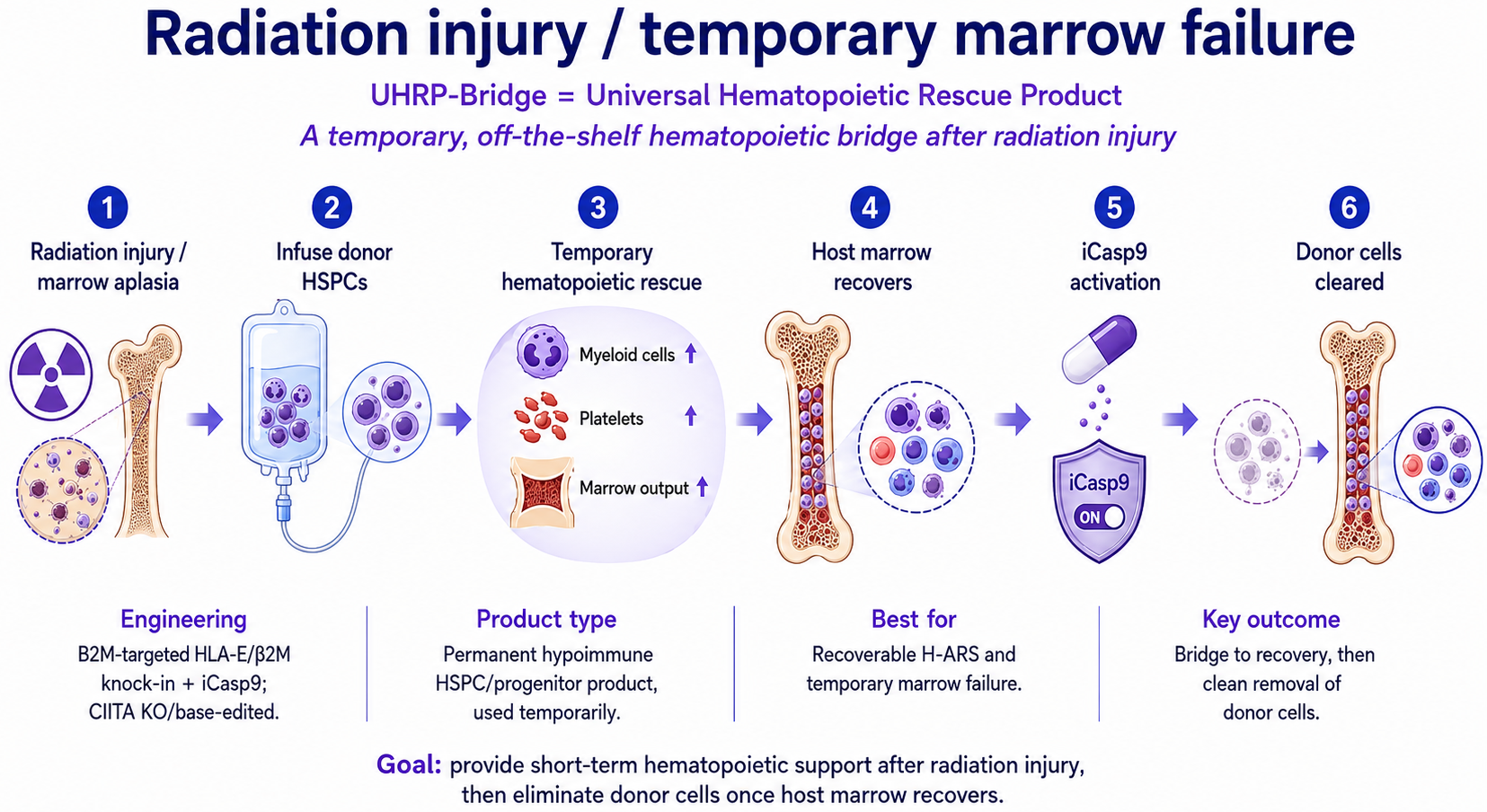
Radiation injury requires hematopoietic rescue in days — not the weeks a donor search and conventional transplant take. A banked, engineered product can be on the shelf before it is needed.
Existing countermeasures push the marrow that is left.
The approved drugs for hematopoietic acute radiation syndrome work by stimulating a patient's surviving marrow. For patients past that point, there is nothing to stimulate.
UHRP-Bridge is designed to supply marrow function directly — a temporary graft that carries the patient through the aplastic window, then clears once their own marrow recovers.
Invisible while it is needed, gone when it is not.
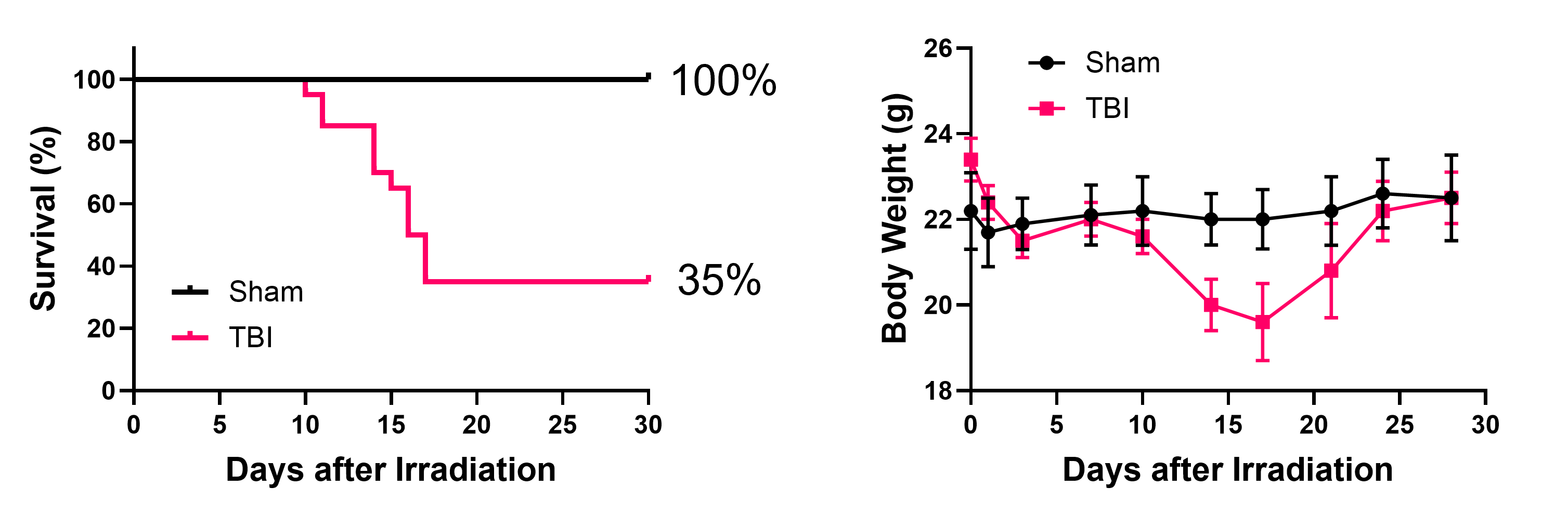
Developed with HJF / AFRRI.
The radiation-injury collaboration with HJF / AFRRI is active and ongoing, and gives this program the fastest route to in vivo platform proof. The regulatory route is a medical-countermeasure path, to be defined through FDA and agency interaction.
Regulatory routes shown are planning hypotheses, not approval claims.