The same platform, turned toward tolerance.
Where the off-the-shelf pillar engineers donor cells to be accepted, the autologous pillar engineers a patient's own HSCs to teach their immune system what to tolerate — in autoimmune disease and in transplantation.
Tolerance by education, or regulation where it is needed.
The two directions are not variations on one idea — they use the platform differently, and they are at different stages of evidence.
Transplant tolerance
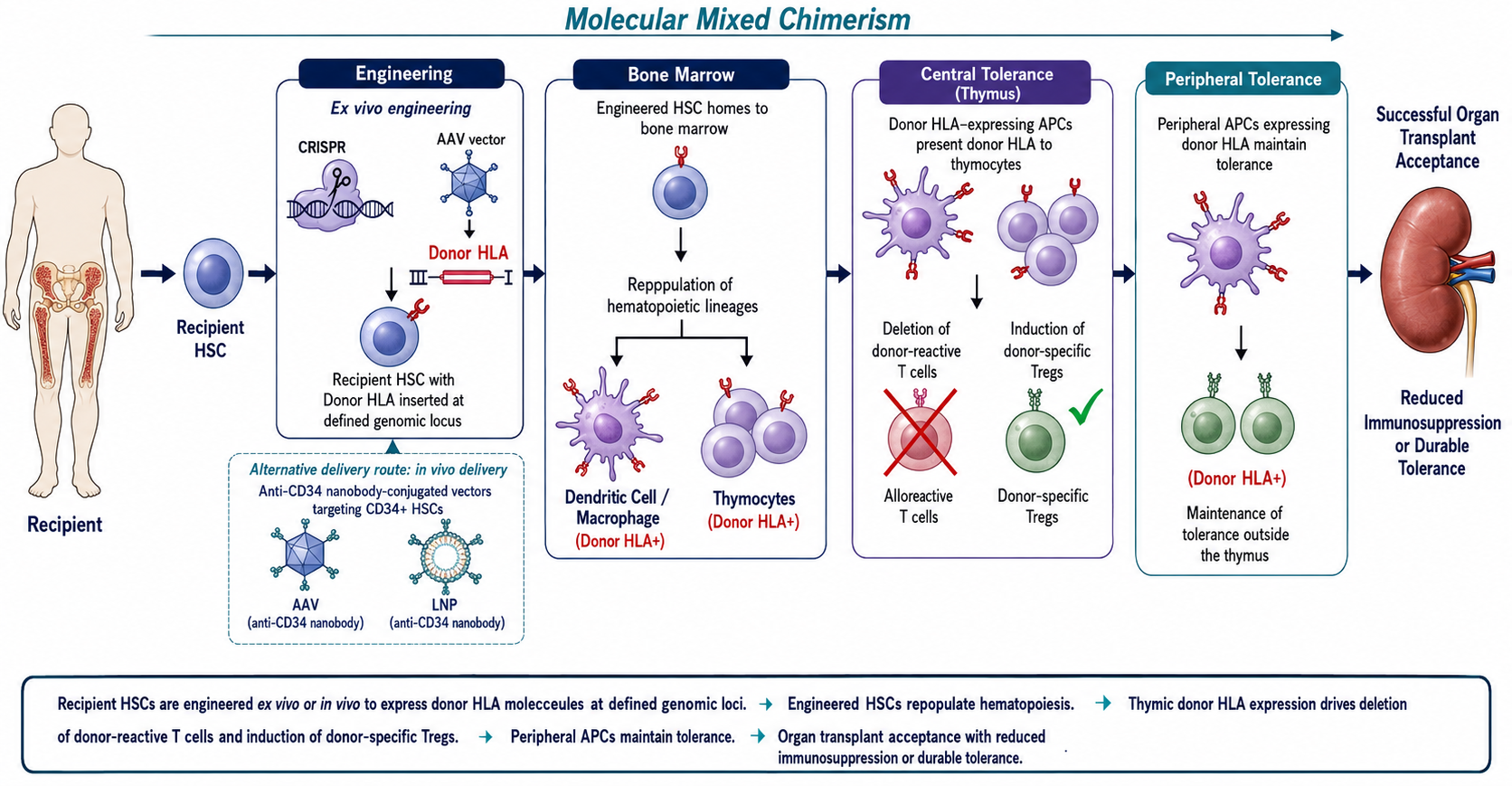
Molecular mixed chimerism: a recipient's own HSCs are engineered to present defined donor identity, so the recipient's immune system is educated to accept the graft — and the graft itself is left biologically untouched.
The goal is donor-specific tolerance without lifelong systemic immunosuppression. Builds on the same developmental HLA-regulation logic used in the SCID program.
Autoimmune disease
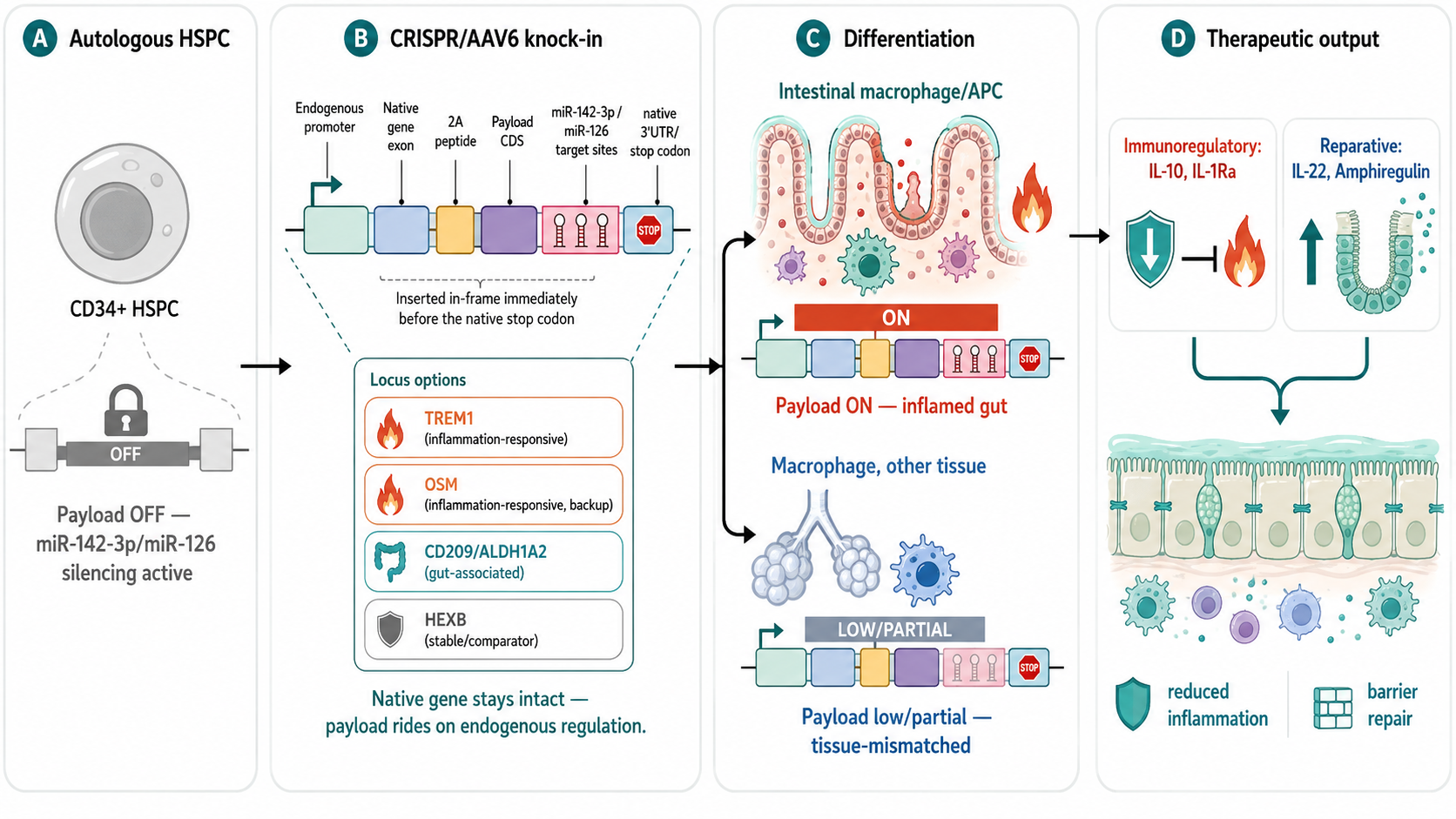
Lineage-directed immunoregulatory programs: a regulated payload that is off in the stem cell, off in healthy tissue, and on only in the myeloid progeny that reach inflamed tissue.
Explored for inflammatory bowel disease and multiple sclerosis — where chronic immunosuppression or high-risk immune reset are today's options.
Logical extensions, not new science.
Builds on the same HLA-regulation engineering logic already used in the SCID program.
Protecting stem-cell-derived islet grafts without systemic immunosuppression — the unsolved bottleneck as these tissues move toward the clinic.
Regulation directed at the CNS compartment, where today's options are chronic immunosuppression or high-risk immune reset.
Gut-directed immune regulation for patients who have failed the approved biologic classes.
Many rare inborn errors are, in principle, correctable by healthy donor hematopoiesis — same toolbox, disease-specific tuning.